Pathways to Innovation
Smart Sound Plymouth provides access to renowned marine science and technology expertise. Offshore testing is complemented by onshore facilities, including state-of-the-art laboratories and testing environments for equipment ranging from small to large.
A pathway to innovation, our range of facilities and those of our partners ensure we can provide robust, comprehensive, cutting-edge testing and data for your autonomous technology projects.
The Smart Sound Plymouth team is experienced in working with commercial organisations and on confidential projects, whilst working to time and budget. Specialist support in advanced materials and manufacturing is complemented by a suite of laboratories for electronics, fabrication, materials, structures, and thermodynamics & fluid dynamics.
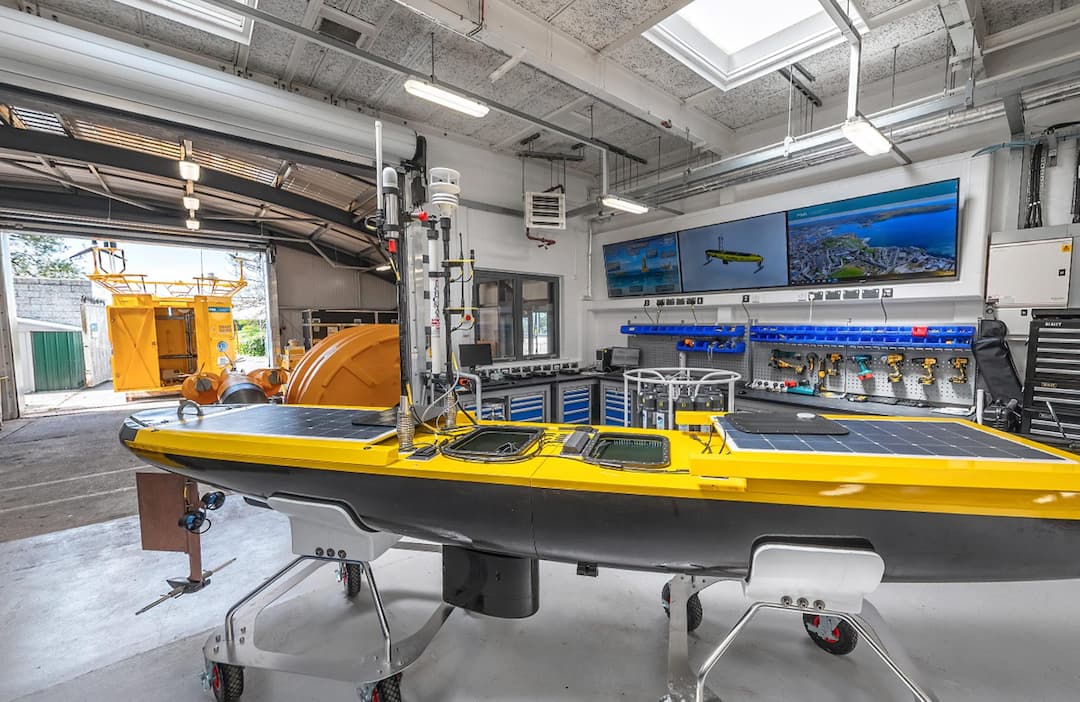
Smart Sound Plymouth Laboratory
The Smart Sound Plymouth Laboratory is based in a large ground level hangar at Plymouth Marine Laboratory, housing marine autonomous vessels via a large roller door. A combined workshop and data centre, featuring a large open plan space with workshop benching, large tanks with piped seawater, and a control room/centre with Smart Sound Connect options will take your projects from concept through to market-readiness. Develop and innovate in the Smart Sound Plymouth Laboratory, using this location as a home base during autonomy trials – start your autonomous technology journey here in a safe and controlled environment.
The Smart Sound Plymouth annex also serves as an ideal location for training and demonstrations. Get hands-on practical experience to train your team or join PML-led training.
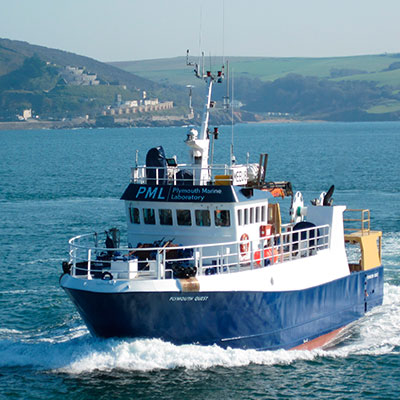
PML Plymouth Quest
The Plymouth Quest is a research vessel owned by Plymouth Marine Laboratory that operates in coastal and offshore regions and can spend up to 5 days at sea. It is equipped with facilities for collecting a wide range of biological, chemical and physical measurements and boasts a suite of underway sensors for autonomous measurements.
- Length: 21.5m, draught: 3.02m
- Maritime and Coastguard Agency Category 2 workboat, able to operate up to 60 miles from a safe haven
- Capacity of 12 passengers plus crew during the day or 6 overnight berths
- Equipped with trawl and sweeping winches, an A frame, net drum, 10 tonne hydraulic crane and hydraulic stern gate
- Sea-Bird scientific rosette sampler with twelve 10L bottles and CTD instrumentation package. Third party sensors can be integrated into this water column profiling system.
- Sophisticated underway sensing system with additional capacity for third party sensor trials. The system is fed through a dedicated seawater intake system, which protrudes 1m below the vessel’s hull.
- 10,000L pristine seawater collection and holding tanks.
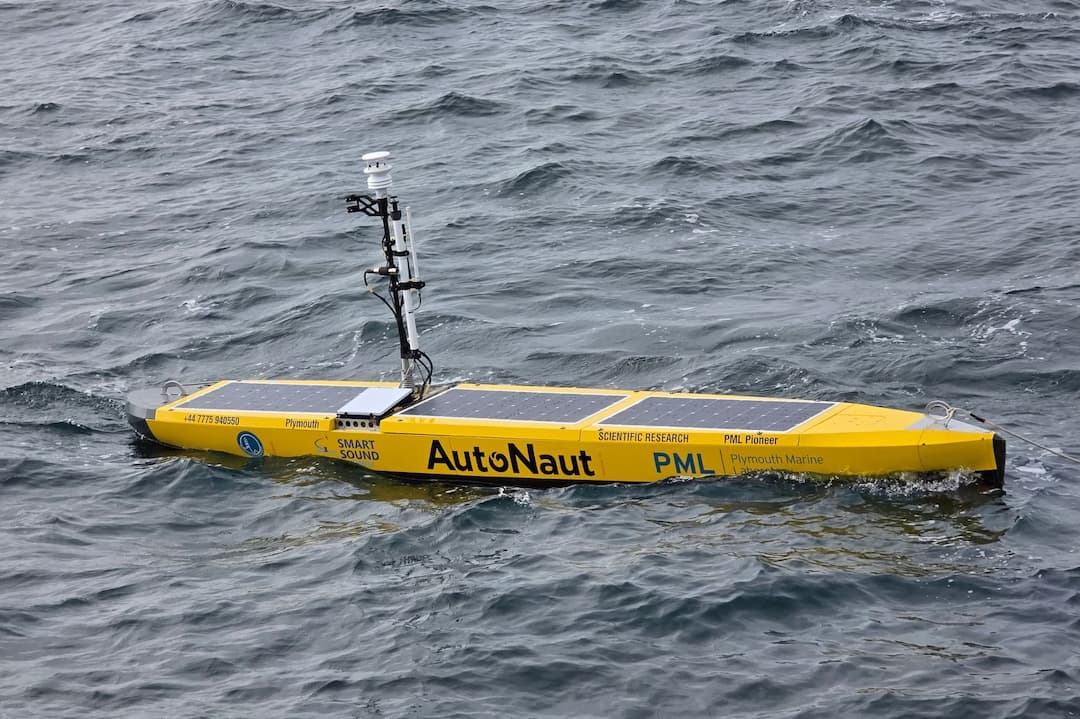
PML Pioneer
The PML Pioneer is a 5m remotely operated AutoNaut surface vessel with a clean propulsion system. The AutoNaut is propelled through the water using fins on the bow and stern, which convert wave motion along the hull into forward motion. The AutoNaut has 300watts of solar panels on the deck that provide charge into a bank of 4 lithium Ion 1200Wh batteries. This provides the onboard power for the command-and-control system, communications, and payload.
The PML Pioneer autonomous vessel is equipped with scientific sensors:
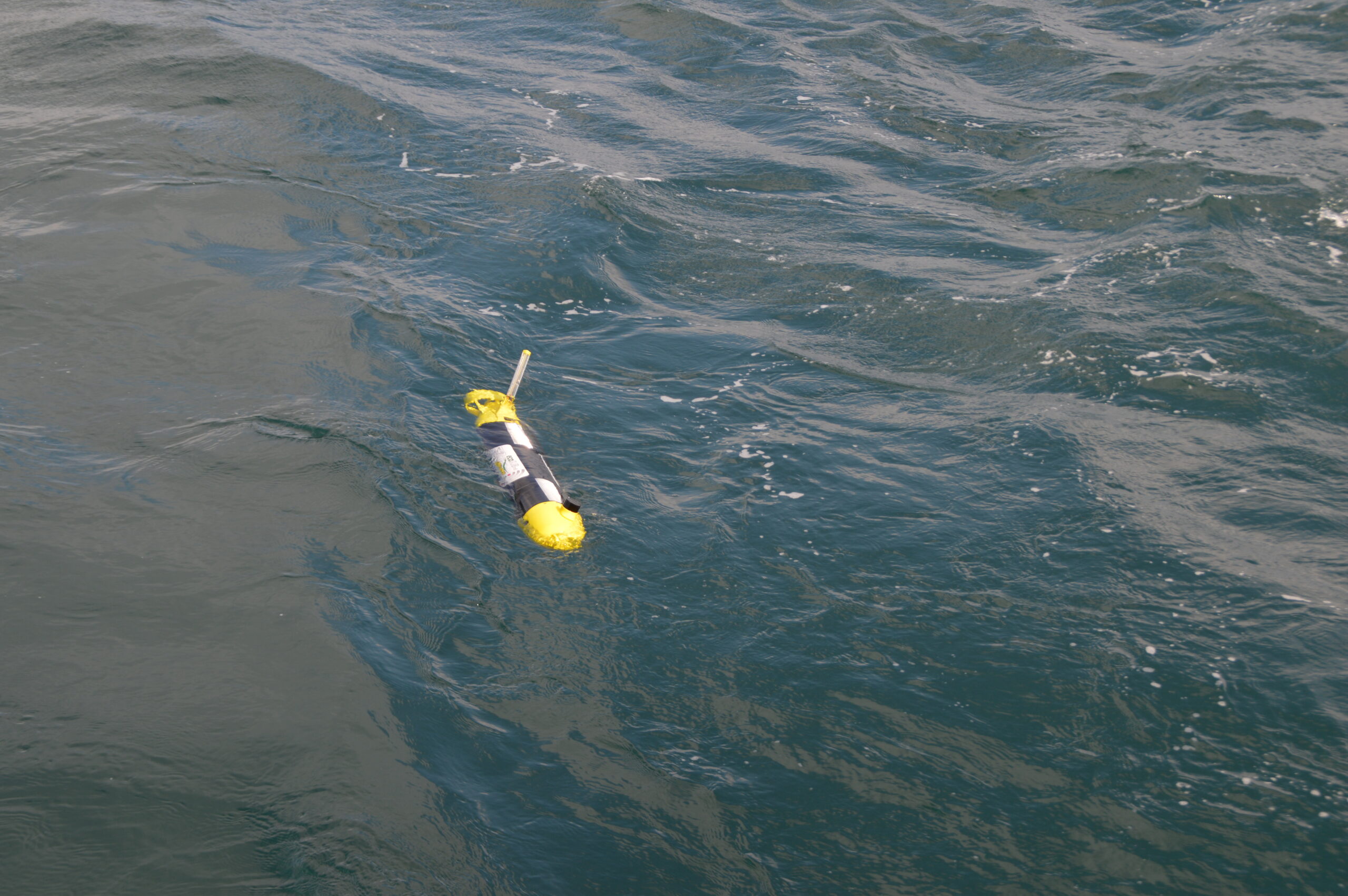
ecoSUb Robotics
PML has a fleet of 3 scientific ecoSUB Robotics Ltd M5 submersibles. These autonomous subs are 500m rated and fitted with nano-acoustic modems, Satellite and surface WiFi communications, and an altimeter. These sensors enable advanced capabilities such as underwater navigation and positioning, as well as sea floor tracking.
The subs are equipped with the following scientific payload:
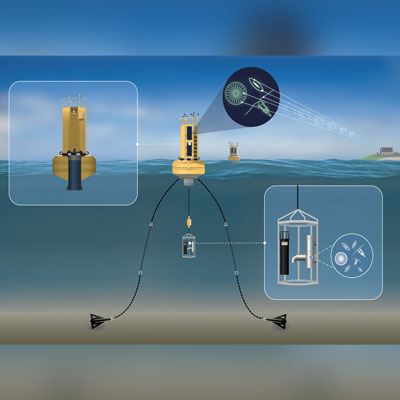
Automated, in situ Plankton Imaging and Classification System (APICS)
APICS – the Automated, in situ Plankton Imaging and Classification System – represents a transformative step in autonomous ocean observing. Used in long-term, autonomous deployments within the Western Channel Observatory, APICS delivers high‑frequency, in situ plankton imagery and automated classification. This capability supports improved detection of ecological change, strengthens climate‑relevant biodiversity monitoring, and reduces reliance on ship‑based sampling, contributing directly to net‑zero oceanography. The platform offers a valuable environment for testing and validating innovative technologies (e.g. sensors), accelerating the development of next‑generation marine monitoring tools.
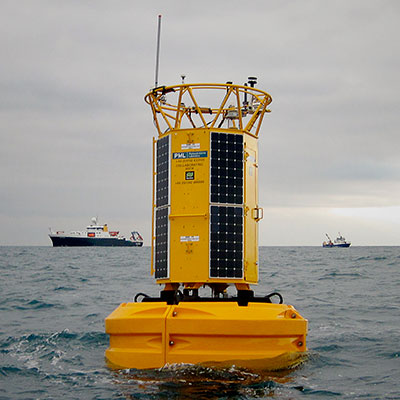
E1 Data Buoy
The E1 station is located at the far south west extent of the Smart Sound Plymouth, some 20 nautical miles south of Plymouth. The E1 buoy is permanently moored at this station in a nominal water depth of 75m. This buoy is provided through a collaboration between the Met Office and the Plymouth Marine Laboratory. The in-water measurements include: sea surface temperature, salinity, oxygen, turbidity, fluorescence (WetLabs WQM)); CDOM fluorescence (WetLabs); nitrate (Satlantic Suna) and a PAR sensor (Satlantic). The above-water met station and wave sensor is operated by the Met Office. Both systems report to shore hourly using Iridium Short Data Burst format and are digested into the Met Office forecasting models as well as hosted on the Western Channel Observatory website.
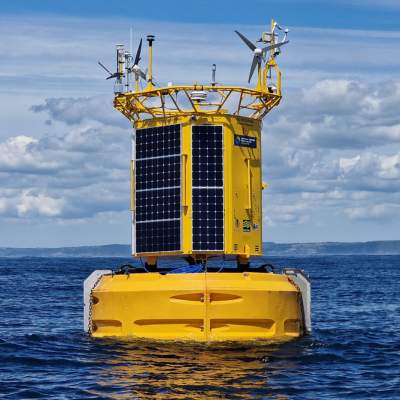
L4 Data Buoy
The L4 station is approximately 6 nautical miles south of Plymouth in 45m of water. The L4 data buoy has an upgraded 4m diameter platform, which stands over 5m above the sea surface. The buoy has been designed and built to have high power generation and plug-and-play capability for sensor integration. The autonomous water column profiling capability deploys a sensor payload through the water column at pre-determined intervals. This capability exists on only a handful of platforms in the world and is certainly unique in the UK.
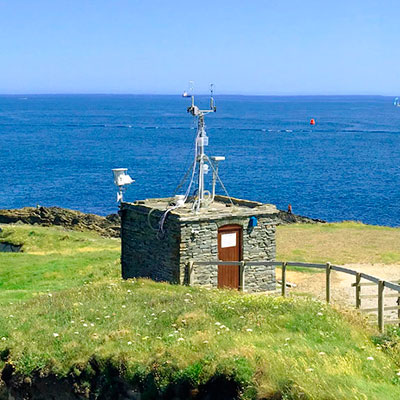
Penlee Point Atmospheric Observatory
The Penlee Point Atmospheric Observatory (PPAO) forms part of the Western Channel Observatory, which takes continuous measurements of several gases in the air, including concentrations of sulphur dioxide, ozone, carbon dioxide and methane, as well as aerosols, trace metals and organics. The PPAO facilitates quantification of air-sea gas transport by using state-of-the-art eddy covariance techniques; it is suitable for long-term, high temporal resolution measurements of air-sea exchange in shelf regions. Additionally, the PPAO has proven very useful in testing and comparing instruments designed to measure fluxes of carbon dioxide and methane terrestrially and assessing their suitability for use in obtaining air-sea flux measurements. It is located in the Rame Peninsula in Cornwall.
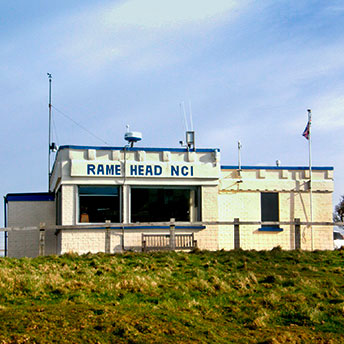
Rame Head Communications and Met Station
The National Coastwatch station on the Rame Head peninsula acts as an ideal platform for offshore communications and meteorological observations. The communication system provides the gateway for the real-time transmission of numerous sensor platforms across the Smart Sound.
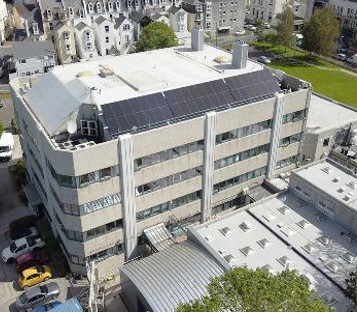
Plymouth Marine Laboratory
Plymouth Marine Laboratory has a host of modern marine science facilities, including multiple laboratories, the mesocosm, and the Marine Matters Centre lecture theatre, accommodating different group sizes to cover your project and training requirements. A hub of marine science innovation, PML hosts companies, providing close access to our leading scientists and facilities.

Unmanned Surface Vessel – CETUS
The L3 Harris C-worker uncrewed surface vessel, CETUS, is a 4.17m diesel-powered USV designed to complete a variety of offshore and inshore survey tasks, housed in the University of Plymouth’s Marine Station waterside campus. C-Worker 4’s waterjet propulsion system makes it an ideal solution for shallow water surveys but equally effective at navigating in deep water. CETUS can stay out at sea for up to 48 hours and reaches speeds of up to 8 knots. The vehicle integrates a range of standard survey payloads, including ADCP, USBL, PAM and CTD. This USV can conduct a variety of mission trials with both wet and dry payload bays, Underwater Retractable Mast (URM), water column profiling sensor winch and the ability to tow sensor packages. The vessel also comes with the Robot Operating System (ROS) interface, which facilitates the trials of third party guidance/mission control software. All missions will be designed and conducted by a professional team, ensuring that all safety and authorisation procedures have been followed. Integration of trial systems into the vessel will be facilitated by specialist software and fabrication engineers.
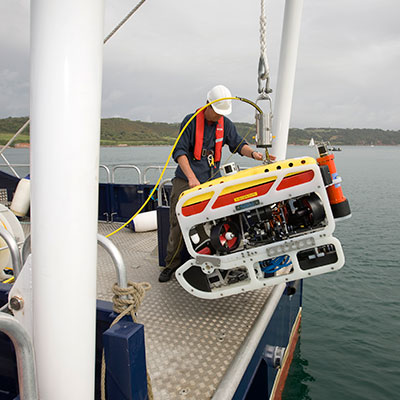
SAAB SEAEYE FALCON ROV
This custom made version of the Saab Seaeye Falcon is equipped to a high specification. This ROV is designed for underwater missions. It includes:
- TRITECH obstacle avoidance sonar
- 4 LED lights
- SEAEYE colour video camera
- HDTV Camera mounted on skid
- Skid Mounted Five Function Hydraulic Manipulator System
- Valeport Modus CTD sensor
- Link Quest USBL system.
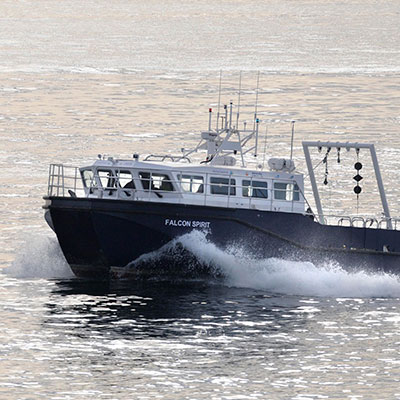
RV Falcon Spirit
The RV Falcon Spirit is a flexible and state-of-the-art catamaran survey vessel for marine research, owned by the University of Plymouth.
The specifications of the RV Falcon Spirit:
- 13.65m aluminium catamaran survey vessel.
- Coded for 14 people to work up to 60 miles from safe haven.
- Beam of 6 metres; offers a large and stable 25m of flood lit configurable aft deck space.
- Internal dry laboratory space for a minimum of 6 workstations.
- Separate wet laboratory facility.
- Pair of 500 horse power diesel engines, capable of a 165 mile range at a 15 knot service speed, with considerable power in reserve
- Capability to troll at very slow speeds.
- 1×1 metre moon pool.
- 2x independent 600kg hydraulic capstans.
- 400kg pot hauler in way of a double door in the starboard bulwark.
- Power is via an independent generator producing 12.3 kVa of clean power to a
- multitude of 240V sockets, a 1.6kw inverter and a 4kw UPS.
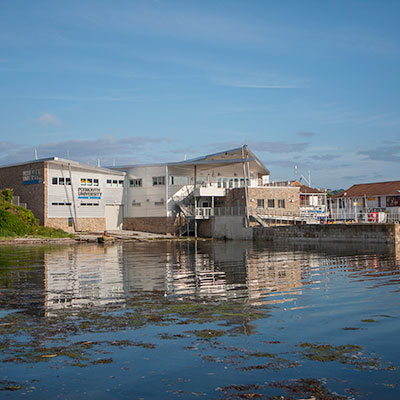
University of Plymouth Marine Station
The Marine Station is a landmark £4.65 million development which serves as the base for marine expeditionary work. Located on the shores of Plymouth Sound as part of the University of Plymouth’s ‘Waterfront Campus’, the facility features:
- Expeditionary base of operations
- Water access from pontoons, lifts & slips
- Equipment storage
- Lecture facilities overlooking the sea
- A wet lab for sample examination and analysis
- A seawater aquarium
- Diver changing facilities
Facilities in Plymouth
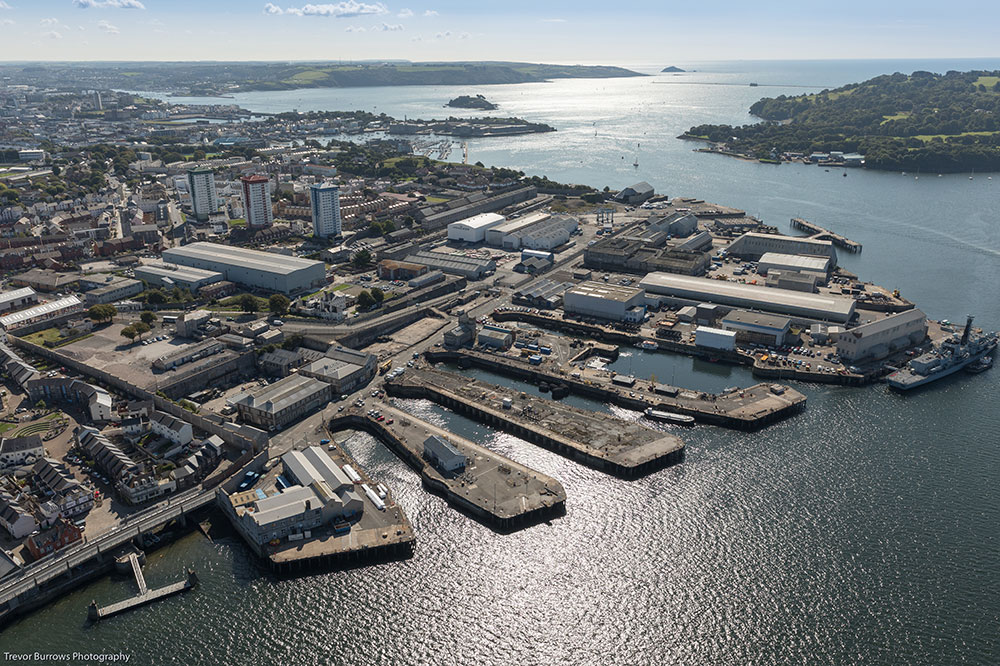
Smart Sound Plymouth is based in the UK’s South West due to the rich maritime history and comprehensive data of the coastline and the surrounding ocean. Recently named the National Centre for Marine Autonomy and with the largest approved testbed for autonomous vessels in the UK, this hub of innovation has plentiful opportunities to test your autonomous technology and collaborate with the stellar service providers and companies based in the South West. This includes: